
Elizabeth Holmes and Theranos: The Patients Were the Real Victims
By Vital Biomedical News Staff
Elizabeth Holmes is back in the headlines. You Can See Everything, a new documentary from Nathan Fielder and Lance Oppenheim, follows the Theranos founder in the weeks before and after she reported to federal prison. It opens in theaters October 16.
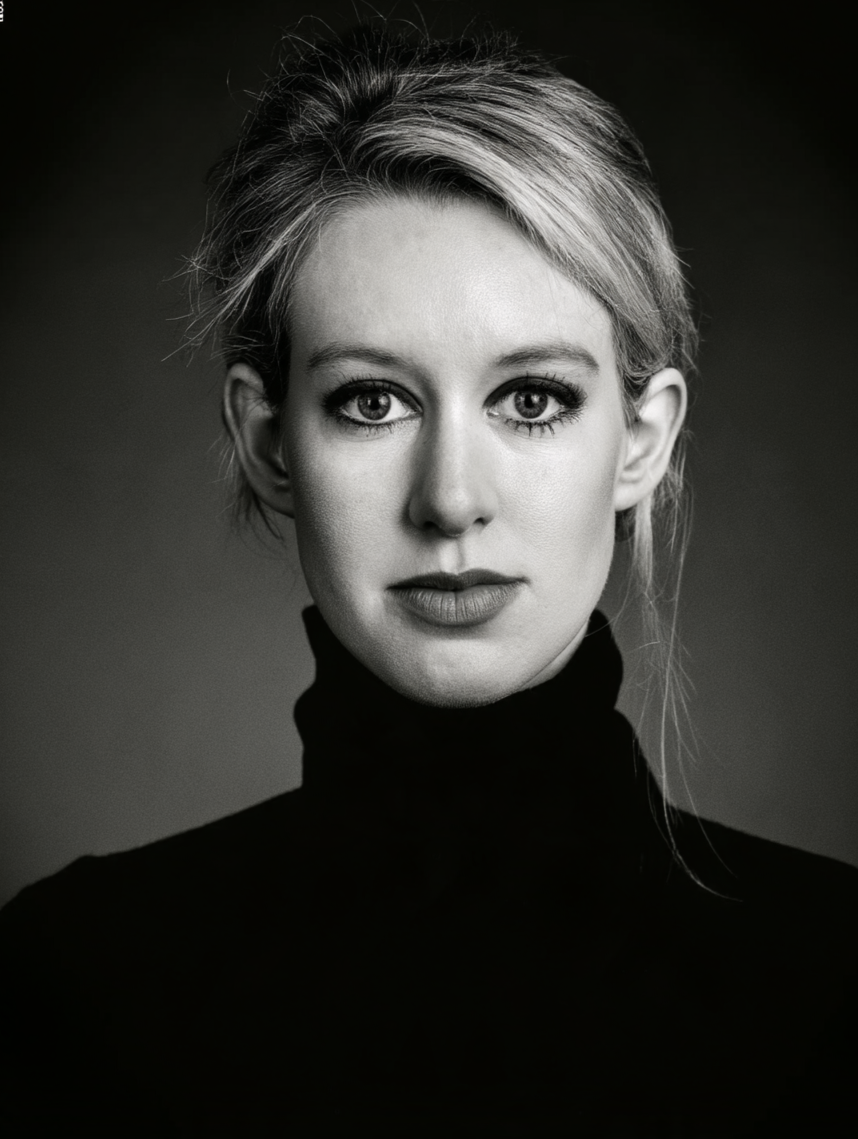
Elizabeth Holmes photographed Benjamin Rasmussen
Theranos is usually told as a story about a charismatic founder and the investors she misled. But at its core, it was a patient care story. Real people walked into a pharmacy, had their blood tested, and received results that turned out to be unreliable.
That matters to anyone who has ever had blood drawn, an ultrasound done, or a result explained to them. Here's what happened to the patients, what a diagnostic test has to prove before anyone should rely on it, and what good patient care looks like when a result is on the line.
The promise: hundreds of tests from a single drop of blood
Theranos claimed its device, called Edison, could run a wide range of lab tests from a few drops of blood taken with a finger prick. It was faster, cheaper, and less painful than a traditional blood draw. Investors poured in money, and Walgreens put Theranos testing centers inside its stores, starting in Palo Alto in 2013 and growing to about 40 locations in Arizona.

The problem was that the technology didn't do what the company said it did. In early 2016, federal inspectors from the Centers for Medicare and Medicaid Services (CMS) found serious problems at Theranos's California lab and warned that its practices put patients in "immediate jeopardy." Within months, the company had voided two full years of results from its Edison device.
Holmes was eventually convicted of defrauding investors and sentenced to more than 11 years in federal prison, a sentence a judge reduced by one year in 2026.
What happened to patients
Holmes was charged with defrauding both investors and patients. In January 2022, a jury convicted her on four counts tied to investors and acquitted her on all four counts involving patients. Her former business partner, Ramesh "Sunny" Balwani, was convicted on all counts in a separate trial, and the Justice Department said his fraud risked patient health by misrepresenting how accurate Theranos tests were.
The verdict settled a legal question, not a medical one. Even when announcing her sentence, the Justice Department noted that Theranos's flawed technology had been used on patients with serious medical conditions. The public record shows patients were exposed to real risk:
Inspectors flagged danger. In January 2016, federal inspectors from CMS found that problems at Theranos's California lab posed "immediate jeopardy" to patient health and safety.
Results were thrown out. Theranos voided all results from its Edison device for 2014 and 2015, and voided or corrected tens of thousands of test reports overall.
Walgreens customers were hit hard. In court filings, Walgreens alleged that about 31,000 of its customers, roughly 11% of those tested in its stores, received voided reports.
Patients weren't always told. Federal inspectors later found Theranos failed to make sure some patients with potentially inaccurate diabetes test results were notified, according to Wall Street Journal reporting.
Behind each voided report is a person who may have made a health decision based on bad information. A 2016 consumer class-action lawsuit described one woman whose endocrinologist took her off thyroid medication after a Theranos result. That is the real cost of an unreliable test: not just a wrong number, but the care decisions made because of it.
What a real diagnostic test has to prove
A trustworthy test isn't one with a good pitch. It's one that has earned trust by clearing several bars, over and over, in front of people who aren't selling it.
It measures what it claims to measure. This is called accuracy. A test's results have to match an established "gold standard" method when both are run on the same patients.
It gives the same answer every time. This is called precision or reliability. Run the same sample twice and you should get the same result, no matter which machine or which technician runs it.
It catches the problem when it's there. This is sensitivity. A test that misses real disease gives false reassurance.
It doesn't flag problems that aren't there. This is specificity. A test that raises false alarms leads to unnecessary worry, procedures, and costs.
It has been checked by people outside the company. Real diagnostic methods are tested in published, peer-reviewed studies. At Holmes's trial, former employees testified that Theranos frequently deleted erroneous results to make its machines look more accurate.
It holds up under regulation and inspection. Labs in the U.S. are overseen by federal standards and regular inspections. At Theranos, former employees and the Wall Street Journal raised alarms first, and federal inspectors then confirmed serious problems in its lab.
If a test can't clear these bars, it doesn't matter how fast, cheap, or convenient it is.
What good patient care looks like
Theranos didn't only fool investors. Doctors received those results too, and some made treatment decisions based on them. It's a reminder that every test, no matter how advanced, depends on the people who choose it, perform it, and interpret it.
The tests most doctors rely on every day aren't flashy, and that's the point. A standard blood draw run on a validated lab analyzer, an ultrasound, an X-ray, an EKG: each has been studied, compared, and refined over years before it became routine.
Doctors choose the right test. A good physician orders a test because it can answer a specific question about your health, not because it's new or convenient.
Trained professionals perform it. Lab scientists, technologists, and sonographers are trained and often credentialed to make sure a sample or image is captured correctly.
Doctors interpret the result in context. A number on a report means little on its own. Your doctor weighs it against your symptoms, history, and exam, and orders a repeat or a different test when something doesn't add up.
Patients hear about their results, and about mistakes. Good care means results are explained in plain language, follow-up is clear, and patients are told promptly if a result was wrong.
That last step is where good medicine catches mistakes. When a result doesn't fit the patient in front of them, experienced doctors question the result instead of the patient.
How film is holding medicine accountable
You Can See Everything is the latest in a growing wave of films and series that put the medical industry under a spotlight. Theranos alone has been covered by an HBO documentary, The Inventor (2019), and a Hulu drama, The Dropout (2022), both released after the Wall Street Journal reporting that first exposed the company in 2015.
These stories reach audiences that court filings and medical journals never will, and sometimes the pressure shows up in the real world:
Medical devices. Netflix's The Bleeding Edge (2018) investigated the medical device industry, including Bayer's Essure birth control implant. One week before the film's release, Bayer announced it would stop selling Essure in the U.S. The company cited falling sales and named negative publicity, including the film's accounts, as one factor, while calling the documentary inaccurate.
Prescription opioids. Hulu's Dopesick (2021) and Netflix's Painkiller (2023) dramatized how Purdue Pharma marketed OxyContin, bringing years of lawsuits and settlements against the company and the Sackler family to millions of viewers.
Film isn't the same as justice. Courts, regulators, and investigative reporters do the actual work of holding people accountable, and dramatized stories can simplify complicated events. But film changes what patients know to ask about, and an informed patient is harder to fool. For doctors, it's a reminder that the public is watching, and that transparency about how tests and treatments work is now part of earning trust.
The biggest lesson from Theranos is that patients are allowed to ask questions. A good provider will be glad you did.
The biggest lesson from Theranos is that patients are allowed to ask questions. A good provider will be glad you did. Medical innovation is exciting, and new tests will keep making care faster and easier. But the standard should never change: prove it works first. As You Can See Everything hits theaters, that's the lesson worth taking home. Vital Biomedical News will review You Can See Everything after it opens in theaters on October 16.
Sources
Court and government records
U.S. Department of Justice: Theranos Founder Elizabeth Holmes Found Guilty of Investor Fraud (2022)
U.S. Department of Justice: Elizabeth Holmes Sentenced to More Than 11 Years (2022)
Consumer class-action complaint against Theranos and Walgreens (PDF)
News reporting
The Wall Street Journal: Hot Startup Theranos Has Struggled With Its Blood-Test Technology (2015)
ABC News: Holmes convicted on investor counts, acquitted on patient counts (2022)
NBC News: Holmes sentenced; employee testimony on deleted results (2022)
NBC News: Holmes's sentence cut in 2026; halfway house transfer (2026)
BioSpace: Theranos voided 31,000 test reports for Walgreens customers
BioSpace: Theranos failed to notify patients of potentially botched diabetes test
Film and the medical industry
