
You Can See Everything, a masterpiece in cognitive dissonance, a mother’s uncomfortable review.
I’d been waiting for this one. Two weeks earlier, Brandon grabbed tickets for Saturday morning, and at 10 a.m. sharp, one day after release, we walked into the AMC in Franklin just as the previews wrapped. We got the best seats in the house. No contest.
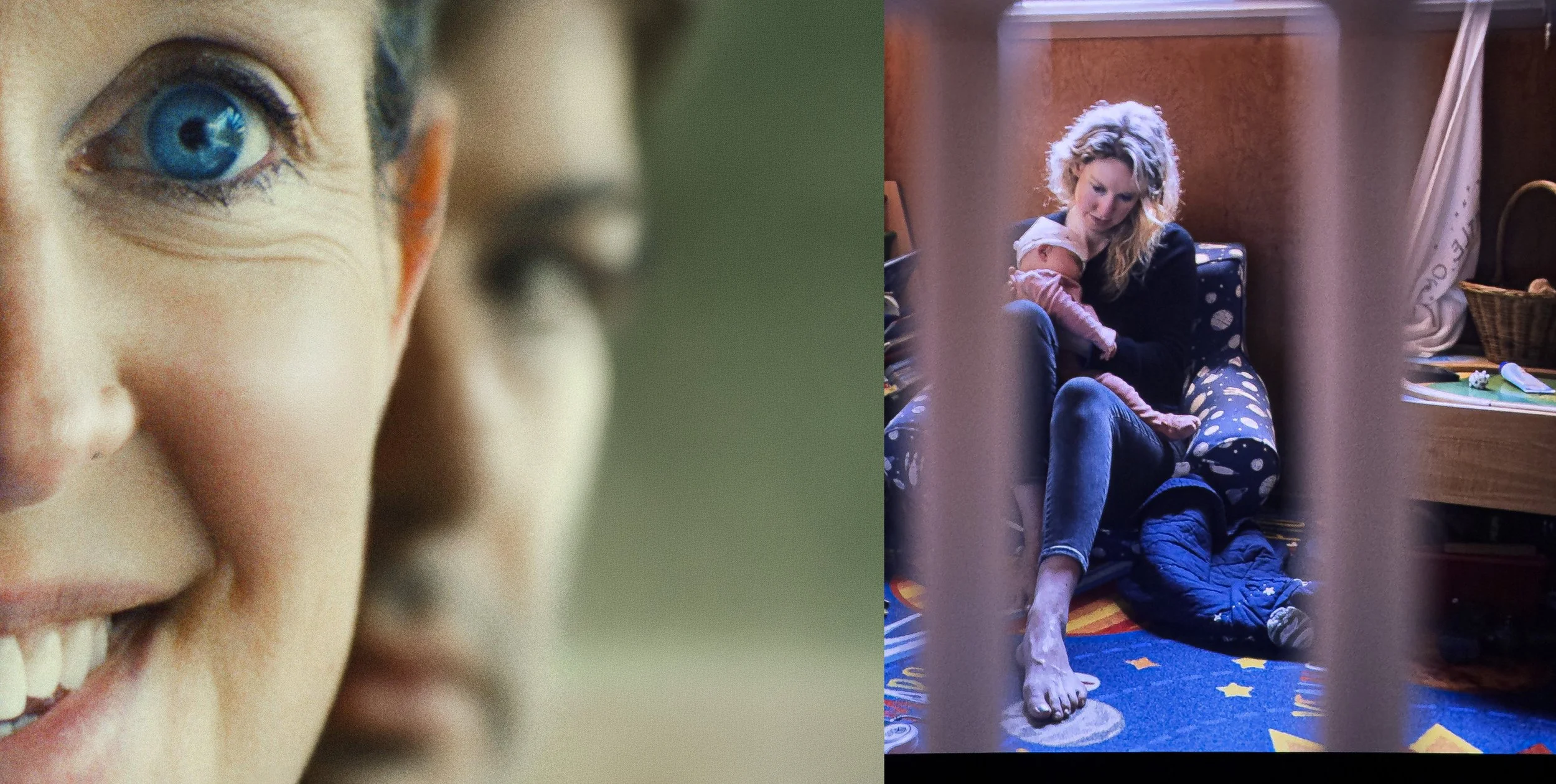
Some context: I’m a photographer, my husband is a cinematographer, and we’ve both recently moved into medicine as heads of marketing for different companies. We’ve also been watching Nathan Fielder together for years. A Nathan Fielder documentary about the most infamous fraud in modern medicine was practically made for the two of us. So there we were.
The Thin Line
The line between genius and insanity is thin. So is the line between a documentary and a script.
The theater was packed, and the whole room leaned forward like it was 2001 again. A24 delivered what A24 delivers: unusually tight lens choices, untouchably balanced color grading, and an uneasy feeling that nobody has pushed this genre to this limit before now. Ari Balouzian’s original score matched the brand: symphonic, haunting, quirky, and exceptionally timely. Scene by scene, Nathan peeled back the mystery of Elizabeth Holmes. He worked like a savant with a paintbrush, methodical and unhurried, and painted a portrait that left us exactly as confused as when we sat down. I mean that as a compliment.
Nathan showed up as exactly the Nathan you know from Nathan for You and The Rehearsal: dry, logical, quietly devastating. I felt like I was forming my opinion in real time, right alongside him. He gave Holmes back her humanity, and I found myself feeling for her the way I felt for Bryan Cranston in Breaking Bad. Except this isn’t fiction, and nobody gets to leave it in the theater.
Then there’s Amanda Seyfried, who played Holmes in The Dropout. I was struck by how easily she seemed to separate herself from whatever pain that portrayal caused Elizabeth. Maybe they have more in common than it appears. An actress who can’t quite own the hurt she caused played a woman who can’t quite own the hurt she caused. The irony is almost too perfect to be a coincidence. I too, a woman, have been guilty of atrocities and unwilling to face the pile of wreckage. But nothing in this story is a coincidence. Webs this tangled don’t weave themselves. Not when patients lives are stake.
I felt for Elizabeth. She has been in abusive relationships, more than one, and that’s undeniable. She let herself be played like a fiddle, and somewhere along the way she learned to enjoy the music. Was she on the spectrum? Was this all just catastrophically bad PR? A million thoughts ran through my head. The media did her dirty. Between social media and the Hulu series, the public reached its verdict long before the jury did. However hard we try not to be biased, the persona gets built for us, guilty or innocent, before we ever meet the person.
So what was the conclusion? Double down: on the concept, and on the lie.
That’s where my sympathy runs out. With patients’ lives at stake, how is she okay with this? There has to be a line between an entrepreneur hitting “roadblocks” with an invention and a lie that is actively hurting people.
Every story’s lead faces hurdles, and pivotal moments to overcome what seems like perhaps impossible character flaws. Here in lies the chance to pivot, to learn, and admit - “I was wrong”. Three words you will not hear from anyone in this documentary.
When a doctor’s tool is the thing making someone sicker, can you knowingly sweep that under the rug and plead innocence? Ignorance is only bliss when it’s real. Can a one-word difference convince an entire generation it was all a misunderstanding? I’d love for it to be that simple. Unfortunately, there are about nine billion reasons to believe she isn’t all that clueless.
Maybe I’d feel differently if not for the kids. It’s hard not to see two children, born right before an eleven-year prison sentence, as a Hail Mary for a lighter one. That isn’t fair to the children, who will grow up without a normal childhood. That part is selfish. Yes, an abusive relationship can push you into things you’d never choose. But I think a mother’s instinct would stop 98% of women. That leaves me with a conclusion I don’t love: whatever she has, it isn’t a mother’s empathy.
The line between genius and insanity is thin. The line between a misunderstanding and a lie is not.
